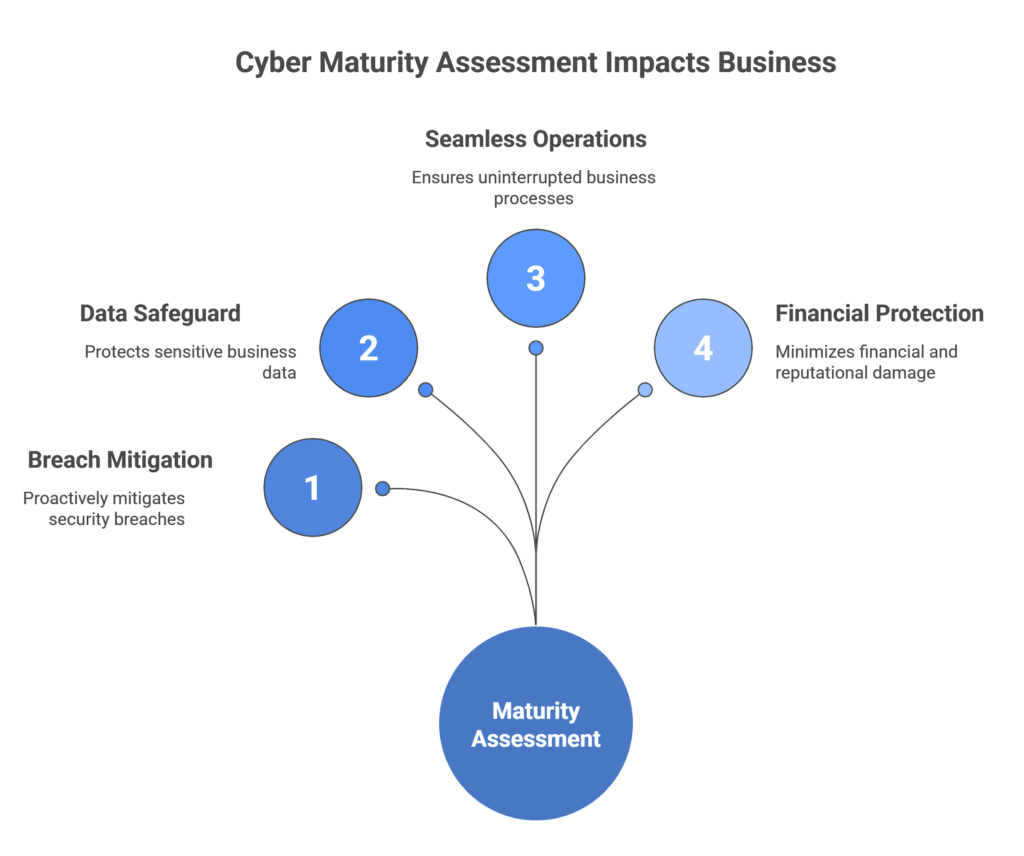
A Cyber Maturity Assessment evaluates how well an organization’s cybersecurity capabilities, processes, and governance are developed and aligned with best practices or frameworks. It empowers businesses to proactively mitigate breaches, safeguard sensitive data, and ensure seamless operations while minimizing financial and reputational damage.
Regular assessments are often mandated by industry standards like ISO, NIST, CERT’s of various countries and Regulatory bodies like GDPR, HIPAA, and PCI-DSS. Non-compliance can lead to hefty fines, operational downtime, and eroded trust. Beyond compliance, a clear understanding of your security posture provides the confidence to drive smarter decisions, allocate budgets effectively, and implement robust risk mitigation strategies.
Frameworks to evaluate cybersecurity maturity
ISO/IEC 27001 – Information Security Management System (ISMS)
ISO/IEC 22301 – Business Continuity Management
CIS (Center for Internet Security) Controls
GDPR (General Data Protection Regulation) – Data protection and privacy (EU)
HIPAA (Health Insurance Portability and Accountability Act) – Healthcare data protection (US)
PCI DSS (Payment Card Industry Data Security Standard) – Payment card security
IRDAI Guidelines – For insurance and BFSI sector compliance (India)
RBI Cybersecurity Framework – For Indian banking and financial services
CCPA (California Consumer Privacy Act) – Consumer data protection
The AWS / Azure Well-Architected Framework is a structured methodology provided by Amazon Web Services (AWS) and Azure that guides cloud architects and developers in designing, building, and maintaining secure, high-performing, resilient, and efficient infrastructure. It offers best practices and recommendations to optimize workloads according to AWS and Azure standards and provides a framework for auditors to assess compliance with these best practices.
Operational Excellence
Ensure Effective operations, monitoring, Logging and Automation Practices of workloads
Security
Ensure Robust security measures to protect data, applications, and infrastructure from threats
Reliability
Ensure Highly available and fault-tolerant solutions
Performance Efficiency
Ensure Optimization, Minimal Latency and Effective resource utilization
Cost-Optimization
Ensure Cost-effective design patterns, resource allocation, and monitoring practices
Assessment Approach
Selection / Preliminary
Identify Scope
Identify Statement of Applicability
Planning
Prepare Checklist
Document the Assumptions
Prepare the Schedule
Execution
Perform the Audit with relevant Auditee as per the defined checklist
Reporting
Document Audit Findings in Standard format
Discuss with Auditee and then share the findings with Management
Follow-up
Understand the status of the findings
Clarify and provide suggestions / recommendations for closure
General Use-cases
Baseline Security Posture Evaluation Organizations use Cyber Maturity Assessments to establish a baseline of their current security posture — identifying strengths, weaknesses, and control gaps across people, processes, and technology.
🟢 Outcome: Clear visibility into current maturity levels and prioritized areas for improvement.
Framework and Compliance Alignment Assessments map existing security controls against leading frameworks such as ISO 27001, NIST CSF, CIS Controls, GDPR, PCI DSS, or IRDAI guidelines.
🟢 Outcome: Improved compliance readiness and audit preparedness with a measurable compliance score.
SOC and Operational Maturity Review Evaluates the organization’s Security Operations Center (SOC), incident response, and monitoring capabilities to identify process inefficiencies and gaps in detection coverage.
Cloud and Hybrid Security Posture Assessment Assesses maturity of cloud controls, identity management, and workload protection across AWS, Azure, or GCP environments.
🟢 Outcome: Strengthened cloud governance, identity hygiene, and policy enforcement.
Third-Party / Vendor Maturity Assessment Evaluates the cybersecurity maturity of vendors, partners, or managed service providers to reduce third-party risk exposure.
🟢 Outcome: Improved supply chain security and assurance over partner ecosystems.